A short note on evolution of Industrial Sensing landscape
Here is a look at how industrial sensing technology has evolved over the decades.
In the early days of industrialization, monitoring processes relied on purely mechanical instruments like simple pressure gauges, fluid-filled thermometers, and limit switches. The introduction of electrical engineering brought the first analog sensors, such as thermocouples in the 1920s and strain gauges in the 1930s.
These early devices converted physical changes—like temperature or structural stress—into continuous electrical signals (often using standard 4-20mA current loops).
While revolutionary for their time, these sensors were strictly one-way communication devices. They required manual calibration, were prone to electrical noise, and could only report a single variable at a time.The Digital Shift and Miniaturization.
The invention of the transistor and the subsequent rise of semiconductor technology in the mid-20th century changed everything. Sensors transitioned from bulky electromechanical devices to solid-state components.
The introduction of Analog-to-Digital Converters (ADCs) allowed continuous analog signals to be translated into discrete binary data. This was crucial for interfacing with the newly developed Programmable Logic Controllers (PLCs) in the 1960s, enabling automated control systems to read precise digital inputs and react instantly.
This era also birthed MEMS (Micro-Electromechanical Systems) technology. MEMS allowed engineers to etch tiny mechanical structures directly onto silicon chips alongside electronic circuits, drastically reducing the size and cost of sensors while improving their reliability.
The Rise of Smart SensorsToday, we are in the era of the Industrial Internet of Things (IIoT). Modern industrial sensors do much more than simply detect changes—they process, analyze, and communicate.
Modern sensors often have microprocessors built-in. Instead of sending raw data to a central server, they process information locally "at the edge," filtering out noise and only transmitting critical anomalies.
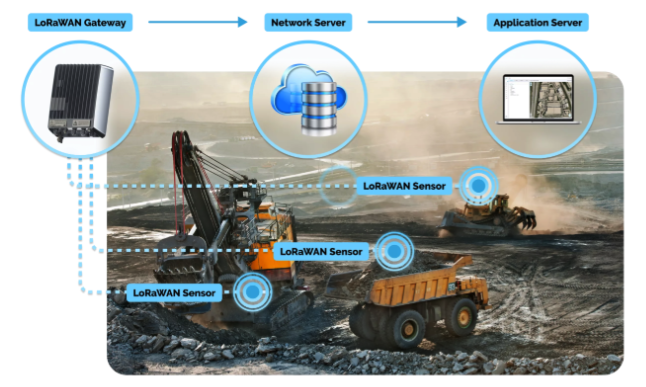
Protocols like LoRaWAN, Wi-Fi, and 5G allow sensors to be placed in hard-to-reach or hazardous areas without the need for expensive cabling.
Smart sensors can monitor their own health, alerting operators when their calibration drifts or if they are close to failing.